One Table, Three Generations: The Quiet Test That Separates Great Resorts from Good Ones
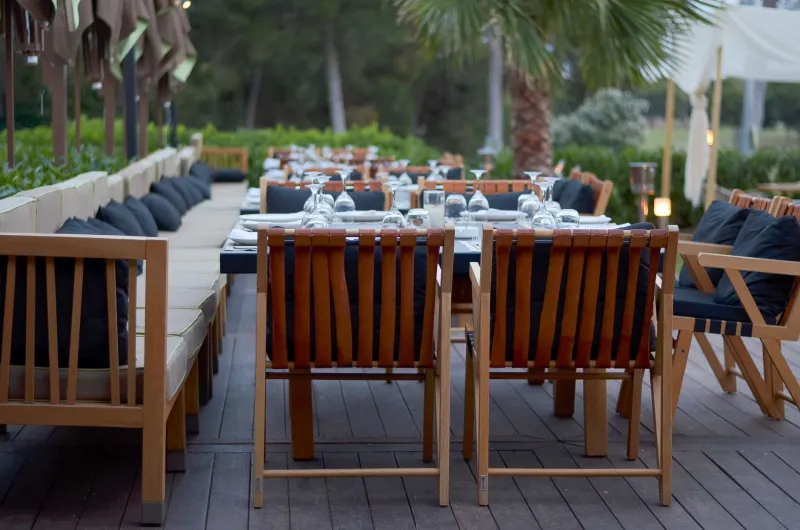
There is a test that no hospitality consultant has formally named, but every seasoned traveler performs it instinctively. Bring three generations to a resort. Sit them down at the same dinner table. Watch. If, by the end of the evening, the grandmother has a story to tell, the millennial has a photograph worth posting, and the child has fallen asleep contentedly in a chair, the property has passed. If the family has spent the day in three separate orbits—kids' club, spa, golf course—something essential has been missed.
The Fastest-Growing Segment in American Luxury Travel
Multigenerational travel has become the quiet engine of the US luxury tourism market. Travel industry surveys consistently point to family reunions and milestone gatherings as the fastest-expanding category of high-end domestic bookings, a trend accelerated by the pandemic-era reassessment of what matters. Affluent American families, scattered across Dallas, Chicago, and Seattle, are increasingly choosing to spend discretionary income not on individual escapes but on collective ones.
The economics are compelling for resorts: one booking can mean six to twelve guests, multiple suites, private dining, and group experiences. But the design challenge is far harder than the arithmetic. A property that simply corrals each age group into its own silo—camp for the children, cabanas for the parents, bingo for the elders—has commodified the family rather than served it.
Designing for the Gap, Not Around It
The most thoughtful resorts in the American luxury landscape have begun treating the generational gap itself as a design brief. Consider the breakfast table. At the finest properties, the menu no longer splits into 'adult' and 'kids' sections but offers dishes with genuine depth that a child can still enjoy: a proper congee alongside the pancakes, a shaved vegetable salad that a curious ten-year-old might actually try.
Architecture plays its part, too. The communal fire pit has returned to prominence precisely because it is one of the few spaces where a seventy-year-old and a nine-year-old stand as equals. Both can roast a marshmallow. Both can tell a story. The best new resort layouts in the Mountain West and along the Carolina coast are organizing their grounds around these neutral gathering zones—shallow lagoons, terrace lawns, demonstration kitchens—rather than around age-gated enclaves.
Even the spa has adapted. Family suites now feature connecting treatment rooms where a mother and daughter can receive side-by-side facials, while grandmother-friendly programming—gentle sunrise walks, botanical drawing classes, wine blending seminars—invites rather than segregates.
The Guide Who Bridges the Decades
The unsung hero of the multigenerational stay is the guide or host who can translate between generations. A skilled naturalist on a guided tidepool walk does not simply lecture the adults while tolerating the children; she arms the youngest guest with the flashlight, lets the teenager identify the species, and offers the grandmother the historical context of the coastline. Everyone leaves having taught and having learned.
This human architecture—the careful matching of staff temperament to family chemistry—cannot be ordered from a catalogue. It is why the best properties invest in long-tenured staff and why families, once they find a resort that passes the test, return with a loyalty that borders on the ancestral.
Why It Matters
Luxury, at its most refined, has always been about time—how it is spent and with whom. The resorts that will define the next decade of American travel are not those with the most impressive kids' club or the most exclusive adults-only wing, but those that understand a family's most precious resource is shared hours. The true measure of hospitality is not how well a property serves each guest individually. It is how gracefully it brings them back to the same table.