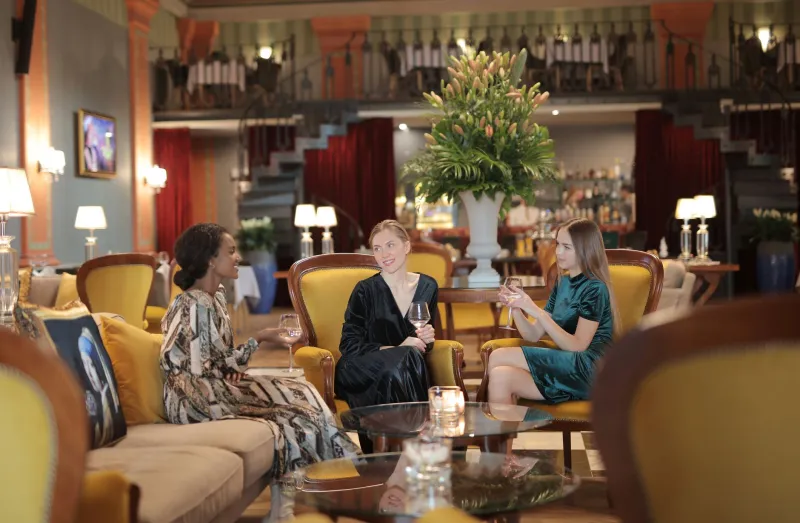
The Art of the Unscripted Moment: Inside the Meticulous Planning Behind Resort Serendipity
The guest who returns from an exceptional resort stay and attempts to explain what made it exceptional will frequently struggle. The room was beautiful, certainly. The food was extraordinary. But what made the stay genuinely memorable—what elevated it from very good to irreplaceable—was something harder to articulate. A conversation that began unexpectedly. A discovery made while wandering. A moment that arrived without announcement and departed without overstaying its welcome.
What that guest almost certainly does not know is that the moment was not accidental. It was, in every meaningful sense, engineered.
This is the central paradox at the heart of modern luxury hospitality: the experiences that feel most natural, most spontaneous, most serendipitous are frequently the product of the most intensive planning. And the skill with which that planning is concealed is, in many ways, the truest measure of a resort's excellence.
The Psychology of Perceived Spontaneity
To understand why luxury resorts invest so heavily in the architecture of apparent serendipity, it is necessary to understand something about how exceptional experiences are encoded in memory.
Research in behavioral psychology has long established that the emotional intensity of a memory is disproportionately influenced by its peaks and endings—the moments of unexpected delight or surprise that punctuate an otherwise pleasant experience. A resort stay that is consistently comfortable but never surprising may be entirely satisfying in the moment, but it is unlikely to produce the kind of vivid, emotionally charged memory that generates the loyalty, advocacy, and return visits that define a resort's long-term success.
Surprise, in other words, is not merely a pleasant addition to the luxury experience. It is a core mechanism of emotional resonance. And because genuine surprise cannot be manufactured on demand—it requires, by definition, that the guest not anticipate what is coming—the resort must find ways to create the conditions for unexpected delight while ensuring that those conditions produce outcomes that are, from the resort's perspective, entirely predictable.
This is a considerably more difficult operational challenge than it might appear.
The Infrastructure of the Unexpected
At the most sophisticated resort properties, the engineering of serendipity begins long before the guest arrives. It starts with the accumulation of guest intelligence: not merely the standard preferences recorded in a loyalty program database, but a more textured understanding of who this particular person is, what moves them, what they find interesting, what they are unlikely to have encountered before.
A guest who has mentioned, in previous conversations with the concierge team, an interest in American craft spirits might find that their afternoon walk takes them past a small tasting setup where a local distiller is sharing a batch that has not yet reached commercial distribution. A guest traveling with a child who has expressed curiosity about marine life might discover, entirely by chance, that a marine biologist is leading an informal tide pool exploration at precisely the time they reach the water's edge. Neither encounter was accidental. Both required weeks of coordination, relationship management, and logistical precision.
The guest relations teams at leading American resort properties have developed what amounts to a choreography of coincidence—a detailed map of how each guest's day is likely to unfold, overlaid with a series of curated encounters and discoveries that have been positioned along that path with surgical care. The objective is not to control the guest's experience but to seed it with possibilities that the guest then chooses to engage with, producing an experience of agency and discovery that feels entirely self-directed.
The Role of Local Relationships
Central to this discipline is the resort's network of relationships with the surrounding community. The most sophisticated properties maintain ongoing partnerships with local artists, musicians, chefs, historians, naturalists, and craftspeople—not for the purpose of programming scheduled events, but for the purpose of having access to genuine human expertise and creative energy that can be deployed with flexibility and spontaneity.
A sculptor with a studio nearby might receive a call from the resort's guest experience director asking whether she would be willing to work in the property's courtyard on a particular afternoon. A jazz pianist who performs occasionally at a nearby venue might be invited to play an informal set in the library—not announced on any itinerary, simply present when guests drift through. A third-generation fisherman might spend an hour on the dock with a guest who expressed interest in local maritime traditions, sharing knowledge that no formal excursion could replicate.
These encounters work because they are real. The artist is genuinely working. The musician is genuinely playing. The fisherman is genuinely sharing something he knows and values. The resort's role is not to simulate authenticity but to create the conditions in which authentic encounters become possible—and then to ensure, through careful orchestration, that the right guests encounter the right people at the right moment.
The Culinary Dimension of Serendipity
Food occupies a particular place in the architecture of the unscripted moment, because culinary surprise operates on both a sensory and an intellectual level simultaneously. The finest resort dining programs understand that the most memorable meals are rarely the most formally impressive—they are the ones that arrive with an element of narrative or discovery.
This might take the form of a dish that appears between courses without explanation, representing something the chef prepared from an ingredient that arrived unexpectedly that morning from a trusted local farm. It might be a tableside visit from a cheesemaker who happened to deliver a small batch of something rare, and who stays for ten minutes to explain its provenance. It might be a wine selection that the sommelier presents not from the standard list but from a small allocation the property secured from a regional producer—offered not to every table, but to the table where a guest mentioned, in passing, an interest in natural wines.
Each of these moments requires preparation, relationship, and judgment. None of them should feel prepared.
The Discipline of Restraint
Perhaps the most demanding aspect of engineering serendipity is knowing when not to intervene. The guest who is discovering something—genuinely wandering, genuinely curious, genuinely surprised—must never feel managed. The moment the hand of the resort becomes visible, the spell is broken. What was a discovery becomes a presentation. What felt like luck becomes a service.
The most skilled guest experience teams understand that their greatest successes are the ones that leave no trace of their own involvement. The guest who returns to their room that evening and recounts, with genuine animation, the unexpected encounter they had that afternoon—the conversation with the weaver, the impromptu tasting, the path through the garden that led somewhere extraordinary—is the guest who has received the resort's highest form of hospitality.
They experienced something real. That it was also, in every logistical sense, entirely arranged is the secret the finest resorts keep with absolute discretion—and absolute pride.