The Invisible Architecture: How the World's Finest Resorts Engineer the Perfect Sensory Environment
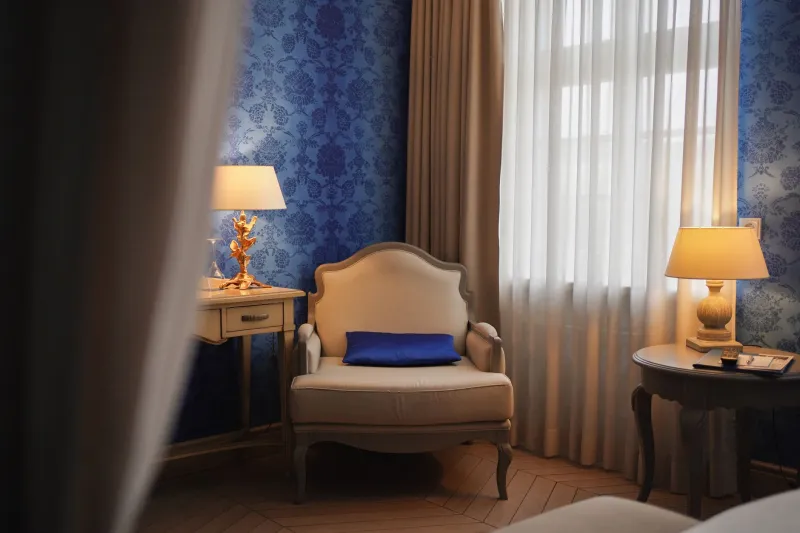
There is a particular quality of ease that settles over a guest upon entering a truly exceptional resort room. It is not the view, though the view may be magnificent. It is not the thread count of the linens, though those too are beyond reproach. It is something altogether less tangible—a feeling that the space has been arranged, at every perceptible and imperceptible level, with the sole intention of making the human body feel precisely right. This is not comfort in its conventional sense. It is comfort as a precision instrument.
The world's most refined hospitality brands have spent the better part of the last decade moving beyond the language of luxury as spectacle—grand chandeliers, towering floral arrangements, ostentatious square footage—and toward something far more demanding: the science and artistry of calibrated sensory experience. The result is a new standard in which excellence is measured not by what guests can see, but by what they cannot quite name.
Temperature as a Design Language
Ask any experienced hospitality designer what separates a good hotel room from an extraordinary one, and the conversation will almost certainly turn to thermal comfort within minutes. Temperature, it turns out, is one of the most psychologically potent variables a resort can control—and one of the most frequently mismanaged.
The standard approach to hotel climate control has long been reactive: a thermostat on the wall, a guest who adjusts it upon arrival, a room that eventually catches up. The leading resorts have abandoned this model entirely. In its place, they have introduced systems that monitor ambient temperature, humidity, and radiant heat simultaneously, adjusting in real time to maintain what physiologists sometimes call the thermal neutral zone—the narrow band of environmental conditions in which the body expends no energy regulating its own temperature.
Humidity, in particular, has emerged as an area of intense focus. A room at 70 degrees Fahrenheit with 30 percent relative humidity feels meaningfully different from the same room at 55 percent humidity. The former can feel arid and slightly fatiguing; the latter, especially in climates where guests arrive from dry air travel, can feel almost restorative. Resorts operating in arid Western states—from the high deserts of New Mexico to the canyon country of Utah—have invested significantly in humidification systems calibrated not merely to comfort ranges but to the specific atmospheric conditions their guests are most likely to have left behind.
The Acoustics of Calm
Sound is perhaps the most underestimated dimension of the sensory environment. For most of the hospitality industry's history, acoustic design has been treated as a problem to be minimized rather than an opportunity to be cultivated. The goal was simply to prevent noise from traveling between rooms. The finest contemporary resorts have a considerably more ambitious agenda.
Acoustic architects working with luxury properties now speak in terms of sound texture rather than mere volume. The objective is not silence—silence, in certain contexts, can feel isolating or even unsettling—but rather what acousticians call a carefully composed ambient field. This might mean the deliberate introduction of low-frequency natural sound: the movement of water, the rustle of wind through native plantings, the subtle resonance of a space with particular ceiling heights and wall materials.
In practice, this translates to decisions that appear, on the surface, to be purely aesthetic. The choice of stone flooring over hardwood in a lobby corridor, for instance, may be as much about how sound behaves in that space as it is about visual elegance. The placement of a water feature at a resort's entrance may serve the dual purpose of masking traffic noise from a nearby road while simultaneously establishing a sonic identity that guests will associate, for the rest of their stay, with arrival and transition.
Several premier American mountain resorts have begun commissioning acoustic studies of their natural surroundings—mapping the frequency profiles of wind patterns across their properties at different seasons—and using this data to inform both architectural decisions and the placement of outdoor guest amenities.
Light That Understands Time
Lighting design in luxury hospitality has undergone a quiet revolution. The shift from static illumination to dynamic, circadian-aware lighting systems represents one of the most substantive changes in how premium resorts approach guest wellbeing—and one that operates almost entirely below the threshold of conscious awareness.
Circadian lighting systems adjust both the color temperature and intensity of artificial light throughout the day in alignment with the body's natural rhythms. In the morning, light tilts toward the cooler, bluer end of the spectrum, reinforcing wakefulness and alertness. As evening approaches, it shifts to warmer amber tones that signal the body to begin the gradual process of preparing for sleep. In a resort context—where guests are often traveling across time zones, disrupting established rhythms, and seeking genuine restoration—this kind of environmental intelligence can meaningfully affect the quality of sleep and the sense of physical recovery.
Beyond the biological, there is the purely aesthetic dimension of light as mood architecture. The finest resort designers speak of light not as illumination but as material—something with weight, direction, and emotional register. A reading alcove lit from a single low source creates an entirely different psychological environment than the same alcove under recessed overhead fixtures, even at identical lux levels. These distinctions, multiplied across every space a guest inhabits during a stay, accumulate into an experience that feels intuitively, inexplicably right.
The Olfactory Dimension
Scent occupies a singular position in the sensory hierarchy because of its direct neurological relationship to memory and emotion. Unlike visual or auditory stimuli, which are processed through the thalamus before reaching the emotional centers of the brain, olfactory information travels a more direct route—one that explains why a particular fragrance can summon a specific memory with a vividness that no photograph can match.
The leading luxury resorts have understood this for some time, but the sophistication with which they now deploy it has advanced considerably. Rather than applying a single signature scent uniformly across a property—an approach that can feel heavy-handed—the most refined properties design what might be called a scent topography: a series of distinct but harmonically related fragrance environments that correspond to different spaces and functions. The spa carries one olfactory register; the dining room, another; the guest corridor, a third. Each is calibrated to the activity and emotional state appropriate to that space, and each transitions into the next with sufficient subtlety that the guest never experiences a jarring olfactory border.
The Sum of Imperceptible Parts
What emerges from this convergence of thermal, acoustic, luminous, and olfactory design is an environment that operates, at its best, as a kind of extended hospitality—one that attends to the guest's wellbeing continuously, without requiring acknowledgment or request. This is the hallmark of true sensory calibration: not the dramatic gesture, but the sustained, invisible competence.
For the discerning American traveler who has moved beyond the satisfaction of amenity checklists and square-footage comparisons, this is precisely what the finest resorts now offer. Not more comfort, but better comfort. Not louder luxury, but more precisely tuned ease. The rooms that feel perfect without the guest quite knowing why are not accidents. They are the result of an extraordinary amount of attention paid to the things that most hospitality brands have yet to learn to see.