The Forgotten Art of the Gathering Place: Why Communal Spaces Are Becoming Luxury's Most Coveted Feature
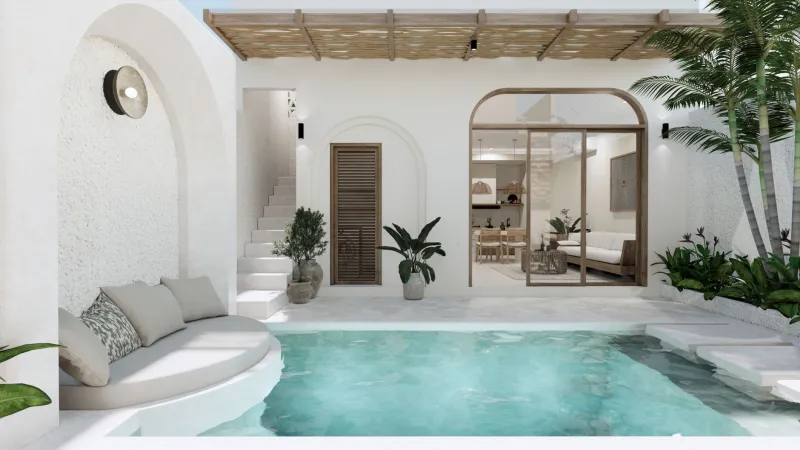
There is a telling irony at the heart of contemporary luxury travel. The very amenities that the industry has spent two decades perfecting — the private plunge pool, the in-villa dining experience, the dedicated personal concierge whose sole purpose is to ensure that a guest need never encounter the inconvenience of other people — have produced, in some of the most discerning travelers, a quiet dissatisfaction that no additional square footage seems able to resolve.
The dissatisfaction, when examined honestly, is not with the quality of the privacy. The villas are magnificent. The service is flawless. The isolation is complete. And yet something is missing — something that cannot be ordered from a room service menu or curated by even the most gifted personal concierge. What is missing, in the most fundamental sense, is other people.
Not the anonymous crowds of a lesser property. Not the performative sociability of a resort pool bar playing Caribbean music at eleven in the morning. But genuine, meaningful, unrepeatable human connection — the kind that has historically been one of travel's most reliable gifts and that the luxury industry's retreat into radical privacy has, inadvertently, made harder to find.
The Pendulum Swings
It would be an overstatement to suggest that the era of private luxury amenities is ending. It is not. The private villa, the exclusive spa suite, the bespoke dining experience for two — these remain, and will remain, foundational expressions of premium hospitality. What is changing is the understanding that these offerings, in isolation, are insufficient.
The most forward-thinking hospitality brands in America are arriving at a more complex philosophy: that true luxury is not the elimination of the social world, but the curation of it. The goal is not to protect guests from other people, but to ensure that the people they encounter are, in some meaningful sense, worth encountering.
This is a significant philosophical shift. It requires resorts to think of their communal spaces not as amenities in the conventional sense — not as features to be listed alongside the fitness center and the concierge desk — but as carefully designed social ecosystems, environments engineered to produce the conditions under which genuine human connection becomes possible.
What Genuine Social Design Actually Looks Like
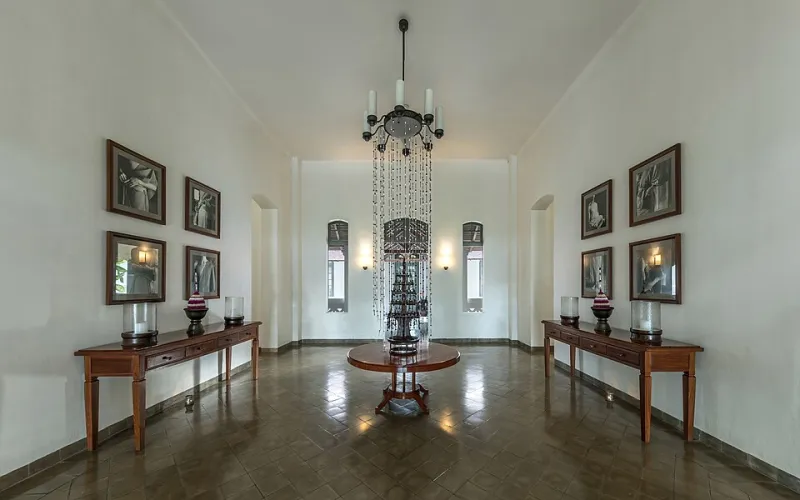
The design principles of a truly successful communal space are, in many respects, the opposite of what the hospitality industry has traditionally rewarded. Grand lobbies, impressive in scale and impeccably appointed, tend to produce spectators rather than participants. They are spaces designed to be admired, not inhabited. People move through them efficiently, registering their splendor without lingering.
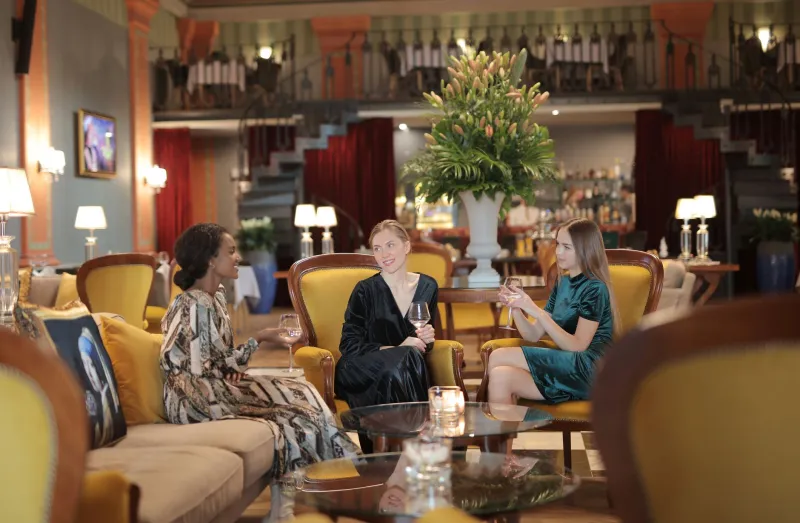
The communal spaces that actually work — that generate the kind of spontaneous, unhurried conversation that guests remember months later — tend to be smaller, warmer, and more ambiguous in their purpose. A library that is also a bar. A terrace that is simultaneously a breakfast room, an afternoon reading space, and an evening gathering place, its identity shifting with the light. A kitchen garden with a central table where guests might find themselves, without quite intending to, shelling beans alongside a stranger who turns out to be a James Beard Award–winning chef on sabbatical.
Ambiguity, counterintuitively, is a social catalyst. When a space has a single, clearly defined purpose, people use it for that purpose and leave. When a space invites multiple modes of inhabitation, people stay — and in staying, they encounter one another.
The Curation Problem
There is an uncomfortable truth embedded in the promise of curated social connection, and the best hospitality brands are honest about it: the quality of a communal experience depends, to a significant degree, on the quality of the community. A gathering space is only as interesting as the people gathered within it.
This is why the most sophisticated resorts are increasingly attentive to the composition of their guest communities — not in any exclusionary sense, but in the sense that a thoughtful host is attentive to the composition of a dinner party. Programming that attracts guests with genuine intellectual curiosity, professional accomplishment, or creative distinction tends to produce richer communal environments than programming designed simply to maximize occupancy.
Some properties have begun to cultivate what amounts to a recurring community of guests — travelers who return annually, who recognize one another across seasons, who form the kind of loose but genuine social bonds that give a place its particular human texture. This is, in effect, the private club model applied to the resort context, and it represents one of the more interesting developments in contemporary luxury hospitality.
Conversation as the Amenity
There is a useful thought experiment that the best hospitality designers apply to communal spaces: if every piece of furniture were removed, if the art were taken from the walls and the carefully selected books from the shelves, would the space still produce good conversation? If the answer is no — if the space depends entirely on its objects rather than its proportions, its acoustics, its relationship to light and landscape — then it has not yet succeeded as a social environment.
The spaces that pass this test share certain qualities. They are intimate without being cramped. They offer natural focal points — a fireplace, a view, a central table — around which conversation can organize itself without becoming forced. They have good acoustics: sound travels enough to create ambient warmth without overwhelming individual exchange. And they are positioned within the broader property in ways that make them easy to encounter accidentally rather than requiring deliberate navigation to find.
These are not qualities that announce themselves in a resort's marketing materials. They are qualities that guests discover by inhabiting a space over time — and that they carry home as the deepest kind of memory, the kind attached not to a photograph but to a feeling.
Why This Matters Now
The renewed emphasis on communal space and genuine social connection at luxury resorts is not merely an aesthetic trend. It reflects something real about the cultural moment in which American travelers find themselves — a moment characterized by widespread awareness of social fragmentation and a corresponding hunger for the kind of meaningful, face-to-face encounter that daily life increasingly fails to provide.
The resort that understands this — that positions its communal spaces not as an afterthought to its private amenities but as their equal and complement — is offering something that no private villa, however magnificent, can replicate. It is offering, in the most literal sense, the world.
And that, for the traveler who has everything, may be the most luxurious offering of all.