Hidden in Plain Sight: Why Ultra-Luxury Resorts Are Abandoning the Grand Entrance
For well over a century, the grand hotel lobby served a singular and unmistakable purpose. Soaring ceilings, imported marble floors, monumental floral arrangements—these were not merely aesthetic choices. They were deliberate declarations of status, designed to signal to guests and onlookers alike that something exceptional was happening within these walls. The arrival experience was, in essence, a performance.
That performance, it appears, is quietly losing its audience.
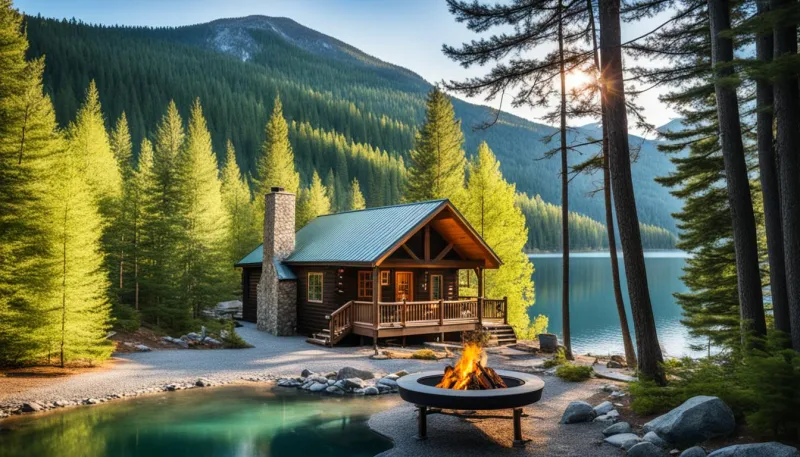
Across America's most sought-after resort destinations—from the sun-bleached coastlines of Southern California to the forested enclaves of the Pacific Northwest—a new hospitality philosophy is taking shape. Ultra-luxury properties are intentionally stepping back from the spectacle of arrival, replacing traditional grand lobbies with something far more considered: the architecture of the unseen.
The Psychology of the Exclusive Threshold
To understand why this shift is occurring, one must first appreciate how the aspirations of the most discerning American travelers have evolved. A generation ago, luxury was defined by visibility. The ability to be seen in the right place, surrounded by the right appointments, was itself a form of social currency.
Today, that calculus has inverted. For a growing segment of high-net-worth travelers, the most coveted experiences are those that feel genuinely private—almost conspiratorial in their intimacy. Luxury, in this reading, is not something to be displayed. It is something to be discovered.
This psychological reorientation has profound implications for how properties are designed and operated. When the experience of arrival becomes a matter of quiet recognition rather than theatrical fanfare, the entire relationship between guest and property transforms. Rather than entering a stage, the guest steps into a confidence.
Architecture That Whispers Rather Than Announces
The physical manifestations of this trend are as varied as the landscapes in which these properties are situated. Some resorts have eliminated traditional reception desks entirely, replacing them with private arrival suites where guests are greeted by a dedicated host who has reviewed their preferences in advance. Check-in becomes a conversation over a thoughtfully prepared beverage rather than a transaction at a communal counter.
Others have redesigned their approach roads and entry sequences to feel genuinely residential. Long, winding drives through curated natural landscapes replace the traditional motor court. Arrival feels less like checking into a hotel and more like being welcomed to a private estate where your presence was expected and prepared for long before you turned off the highway.
In several notable cases, properties have gone further still—removing exterior signage almost entirely. For those who know, the address is sufficient. For those who do not, the property simply does not exist. This is gatekeeping not through restriction, but through deliberate obscurity.
The Operational Dimension: Service That Precedes the Ask
Architecture alone cannot sustain this philosophy. The shift away from the grand lobby demands an equally significant transformation in how resort teams operate behind the scenes.
When there is no public-facing reception area to anchor the guest experience, the burden of creating a sense of welcome falls entirely on staff preparation and genuine personal knowledge. Properties committed to this model invest substantially in pre-arrival intelligence—not surveillance, but attentiveness. A guest's preferred room temperature, the particular pillow configuration that allows them to sleep well, the fact that they celebrated an anniversary at this property four years ago and might appreciate a quiet acknowledgment of that milestone.
The amenities themselves follow suit. Rather than a sprawling wellness center announced with prominent signage and visible from the main corridor, the most exclusive offerings are communicated privately—mentioned in conversation, accessible through a dedicated in-room interface, or simply arranged without the guest needing to ask. The discovery of a private rooftop terrace reserved exclusively for a particular suite category, or a members-only dining experience available only to returning guests, becomes part of the pleasure of the stay.
What This Reveals About American Luxury Culture
The retreat from the grand lobby is not merely a design trend. It is a cultural statement, and one that reflects a meaningful evolution in how affluent Americans relate to their own prosperity.
In an era of radical transparency—where virtually every experience is documented, shared, and evaluated publicly—genuine privacy has become extraordinarily scarce. The ability to inhabit a space that exists outside of the visible economy of social media, that rewards loyalty and knowledge rather than mere expenditure, carries an appeal that no amount of marble or crystal can replicate.
There is also something deeply appealing about the member-like quality of these experiences. When a property knows you—truly knows you, not merely your credit card number—the relationship takes on a character that transcends the transactional. You are not a guest in the conventional sense. You are a participant in something smaller, more considered, and considerably more meaningful.
The Future of Arrival
For travelers accustomed to measuring luxury by its visible dimensions, this shift may initially feel disorienting. Where is the grandeur? Where is the statement?
The answer, increasingly, is that the statement is the absence of a statement. The most sophisticated hospitality experiences of the coming decade will be defined not by what they display, but by what they protect—the guest's time, attention, privacy, and sense of genuine belonging.
Properties that understand this are not abandoning luxury. They are refining it to its essential core: the feeling of being known, anticipated, and genuinely valued in a space that exists, quietly and deliberately, for you alone.