Silence as a Premium Amenity: The Rise of Intentional Disconnection at America's Most Exclusive Retreats
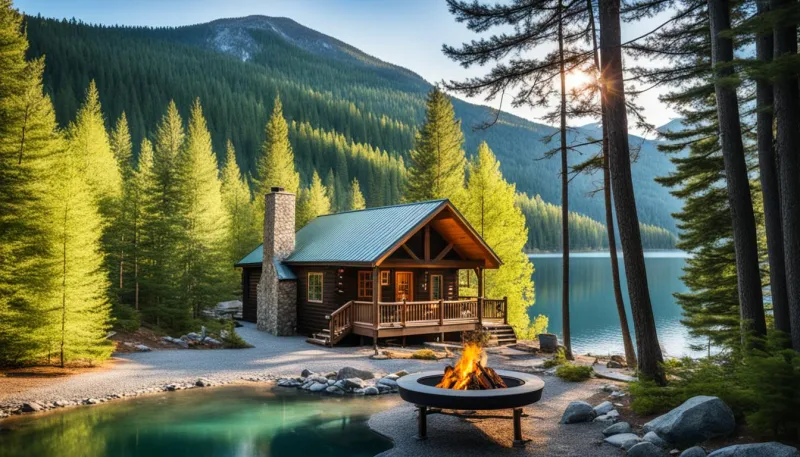
Photo: luxury remote retreat cabin wilderness disconnected nature peaceful, via tripjive.com
There is a particular irony embedded in the modern luxury travel experience. For decades, premium hospitality brands competed vigorously on the strength of their technological offerings—faster broadband, smarter room controls, seamless streaming, and voice-activated concierge systems. The assumption was axiomatic: a well-appointed traveler expects a well-connected room. Yet across the American luxury hospitality landscape, a quietly radical countermovement has taken root, and its implications are reshaping the very definition of what an exceptional escape should deliver.
Elite travelers—executives, creatives, and high-net-worth individuals accustomed to commanding every available convenience—are increasingly seeking accommodations that do something altogether unexpected. They are paying premium rates to be left alone. Not merely undisturbed, but genuinely, architecturally, and philosophically unreachable.
The Scarcity Economy of Genuine Stillness
In an era defined by perpetual notification, authentic disconnection has become genuinely rare. The market has responded accordingly. Properties that once might have apologized for limited cellular reception now frame that same limitation as a curated feature. Resorts nestled in remote valleys of Montana, tucked into the canyon country of southern Utah, or perched above fog-laden coastlines in Northern California are discovering that their geographic isolation is not a liability to be overcome—it is, in fact, the product.
The logic is straightforward when examined through the lens of scarcity economics. Connectivity is everywhere. It follows the affluent traveler onto private aircraft, into boardrooms, and through every hour of a typical working day. What has become genuinely scarce—and therefore genuinely valuable—is its absence. Properties that understand this are not simply withholding WiFi as an affectation. They are constructing an entire experiential philosophy around the premise that restoration requires separation.
Some of the most sought-after retreats in this emerging category have gone considerably further than simply limiting bandwidth. Design choices are made with intentional purpose: rooms are oriented away from roads to eliminate ambient traffic sounds; reading lamps are calibrated to warm, screen-comparable tones that ease the eye strain of habitual device users; printed daily programs replace digital itineraries; and analog clocks are placed where smartphones might otherwise be consulted. The cumulative effect is an environment that does not merely tolerate disconnection—it actively engineers it.
Who Is Choosing to Disappear, and Why
The profile of the deliberate disconnector defies easy categorization. These are not individuals fleeing technology out of technophobia or philosophical objection. Many are, in their professional lives, among the most digitally sophisticated people in the country—tech founders, media executives, financial strategists, and legal professionals whose careers depend on constant availability. The choice to become unreachable is, for them, precisely as significant as it sounds.
Conversations with guests who have sought out these intentional retreat experiences reveal a consistent theme: the desire is not to escape responsibility, but to recover the mental clarity that sustained responsibility requires. One frequently cited observation is that genuine problem-solving—the kind that produces original thinking rather than reactive decision-making—requires extended periods of cognitive quiet that a connected environment structurally prevents.
For others, the motivation is more personal. The luxury of being present with a traveling companion, a family, or simply with oneself, without the ambient pull of the inbox, represents something that money can increasingly purchase only in very specific, very deliberate contexts. That specificity commands a price.
How Premium Properties Are Structuring the Offering
The monetization of disconnection is not without its nuances. Properties navigating this space must manage a fundamental tension: guests who choose disconnection retreats are accustomed to a level of service that depends, in part, on sophisticated operational infrastructure. The challenge is to deliver seamless, anticipatory hospitality without allowing that infrastructure to intrude on the guest experience.
The most successful properties resolve this tension through what might be described as invisible excellence. Staff communication remains digitally enabled on the operational side, entirely out of guest view. Room service, housekeeping coordination, and activity scheduling function with the precision that discerning guests expect—but none of it surfaces as an app notification, a digital display, or a glowing screen beside the bed. The guest encounters only the outcome of that operational sophistication: a meal that arrives at precisely the right moment, a guided excursion that begins without administrative friction, a room that is refreshed with an almost uncanny sense of timing.
Some properties have introduced what they term analog concierge service—a dedicated staff member assigned to each party, available through a simple in-room telephone or in person, whose role is to translate guest preferences into seamless arrangements without requiring the guest to engage with any digital interface whatsoever. The experience is, for many guests, startlingly novel. It resembles, in texture, a mode of travel that belonged to an earlier era of hospitality—and its rarity in the contemporary landscape is precisely what makes it feel luxurious.
The Design Language of Deliberate Absence
Interior design plays a foundational role in the disconnection retreat experience. Properties committed to this philosophy approach their spaces with a different set of priorities than a conventional luxury hotel. The goal is not to impress through technological sophistication or visual maximalism, but to create environments that are, in the most considered sense of the word, calming.
Natural materials dominate—stone, unfinished wood, linen, and leather that develops character with use. Lighting schemes favor the warmth of fire and candlelight wherever safety and practicality permit. Windows are positioned to frame landscapes rather than skylines. The visual field, in the most thoughtfully executed examples, contains nothing that competes for attention or triggers the reflexive engagement response that screens have trained into the modern nervous system.
These are not austere spaces. The linens are exceptional. The bath products are considered. The furniture is chosen with the kind of care that reveals itself slowly, over hours of habitation rather than in a first impression. Luxury is present in every surface—it has simply been decoupled from the digital vocabulary that has come to dominate the category.
A Redefinition Worth Taking Seriously
The emergence of intentional disconnection as a genuine luxury category invites a broader reconsideration of what hospitality at its highest level is actually meant to provide. If the purpose of a premium escape is restoration—physical, mental, and emotional—then the question of which tools best serve that purpose deserves honest examination.
Technology, deployed thoughtfully, can enhance a guest's experience in meaningful ways. But the assumption that more connectivity always equals more value is one that the market is quietly but decisively beginning to challenge. The travelers choosing to disappear are not rejecting luxury. They are, in many respects, pursuing it more deliberately than ever—and the properties that understand this distinction are finding that silence, offered with genuine intention, is among the most compelling amenities they have ever placed on the menu.