Unscheduled Luxury: The Rise of the Unhurried Resort Stay
For decades, the American approach to vacation carried an almost competitive undertone. Travelers returned home with color-coded itineraries completed, landmarks photographed, and restaurant reservations honored to the minute. The measure of a successful trip was how much had been accomplished. Today, something fundamental is shifting. Among the most affluent and well-traveled Americans, the new marker of a truly exceptional escape is not what was done—but how deeply one was allowed to simply rest.
This philosophy, broadly termed slow travel, is no longer the preserve of European retirees drifting through Tuscany. It has arrived, with quiet confidence, at the doors of the world's finest luxury resorts.
The Psychology Behind the Pause
Hospitality researchers and wellness professionals have long understood what leisure science confirms: the human mind requires extended periods of disengagement to achieve genuine restoration. A weekend getaway, however luxurious, rarely penetrates the cognitive armor that high-achieving professionals carry with them. It takes time—often three to four days at minimum—before the nervous system begins to genuinely release accumulated stress.
"Guests arrive carrying the full weight of their professional lives," notes one senior hospitality consultant who advises premier resort brands across North America. "The first day is almost always transitional. They're still checking their phones, still mentally in the office. The transformation doesn't begin until day two or three. That's when the real luxury experience can actually commence."
This understanding has prompted a meaningful rethinking among top-tier properties. Rather than filling every hour with programming—sunrise yoga, afternoon excursions, evening cocktail receptions—the most forward-thinking resorts are curating what might be called structured spaciousness: a framework of beautiful possibilities that guests may embrace or decline entirely, without guilt.
Redesigning the Luxury Offering
The practical implications of this philosophy are visible in how premium properties are restructuring their amenities and packages. Extended-stay incentives, once the domain of budget hotel chains, have been reimagined at the luxury level. Properties now offer meaningful rate advantages for stays of five nights or longer, not merely as a revenue strategy, but as a genuine invitation to settle in.
Spa programming has undergone particularly notable evolution. Where treatments were once offered as individual, bookable sessions, leading resorts now present multi-day wellness journeys—progressive sequences of therapies designed to work in concert over several days. A guest might begin with a deep-tissue treatment focused on physical release, progress to a restorative hydrotherapy experience on day two, and conclude with a mindfulness-centered ritual that consolidates the cumulative work of the preceding sessions.
Culinary programming has similarly adapted. Rather than one-off cooking demonstrations, properties are offering intimate, multi-session explorations of regional cuisine—small-group experiences that unfold over the course of a stay, building genuine knowledge and connection rather than providing a single performative moment.
Authentic Local Immersion, at a Considered Pace
One of the most compelling dimensions of slow travel is its capacity to facilitate authentic engagement with a destination. When travelers are not racing between attractions, they discover the unhurried rhythms of a place: the morning light at a particular hour, the way a local market changes from week to week, the unhurried conversations that arise naturally when one is not consulting a schedule.
Luxury properties are increasingly serving as thoughtful intermediaries in this process. Concierge teams at leading resorts have moved away from the transactional model—booking tours, securing reservations—toward a more curatorial role. They are cultivating relationships with local artisans, farmers, musicians, and historians, creating opportunities for guests to engage meaningfully with the communities surrounding their property.
A family staying for ten days, for instance, might spend one morning with a local ceramicist, not as a tourist activity but as a genuine apprenticeship of a few hours. They might visit a nearby farm on another afternoon, not on a scheduled group tour but through a private introduction arranged by a concierge who has known the farmer for years. These moments resist commodification precisely because they are unhurried and personal.
Testimonials from the Converted
Among American travelers who have embraced extended luxury stays, the response is remarkably consistent. A technology executive from San Francisco who recently completed a ten-night stay at a premier resort property described the experience as "the first time in fifteen years that I genuinely forgot what day of the week it was—and meant it as a compliment."
A couple from New York, both attorneys, recounted how their initial instinct was to fill their week with excursions. "We had a list," the wife recalled. "By day three, the list was in the nightstand drawer. By day five, we'd forgotten it was there. We ended up spending two full afternoons just reading by the pool, which sounds unremarkable, but felt genuinely revolutionary."
This pattern—initial resistance followed by gradual surrender followed by profound appreciation—appears to be nearly universal among first-time slow travelers. The transition requires both time and the right environment: a property that communicates, through its design, its pace, and its service philosophy, that there is nowhere else one needs to be.
The Role of Design in Facilitating Stillness
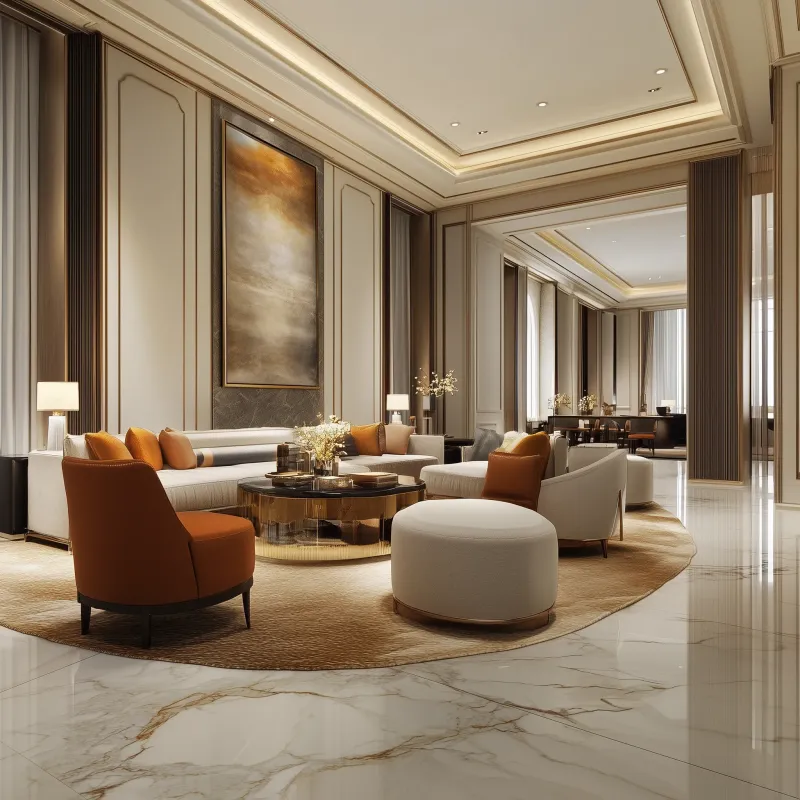
Environment is not incidental to the slow travel experience—it is foundational. Luxury properties that successfully cultivate unhurried atmospheres share certain design sensibilities: generous proportions that discourage the sense of being crowded or hurried, natural materials that connect guests to the surrounding landscape, and a deliberate absence of the visual noise that characterizes so much of contemporary commercial space.
Lighting plays a particularly significant role. Properties attentive to the slow travel ethos tend toward warm, low-intensity illumination that signals to the body that it is permitted to relax. Outdoor spaces are designed not as amenity checkboxes but as genuinely inhabitable environments—places where one might spend an entire afternoon without any particular agenda.
The cumulative effect of these design choices is an atmosphere that actively supports disengagement. Guests do not have to work against their environment to find stillness; the environment works with them.
An Invitation Worth Accepting
The slow travel movement represents something more significant than a hospitality trend. It reflects a broader cultural recalibration among affluent Americans—a growing recognition that the relentless optimization of experience may itself be a form of impoverishment. To truly luxuriate in a place is to allow it time to reveal itself, and to allow oneself the grace of being genuinely present.
At Oxley Sofitel, we believe that the finest escapes are not measured in activities completed but in moments genuinely inhabited. We invite our guests to arrive with curiosity, to release their schedules, and to discover what becomes possible when the most pressing question of the day is simply: what do I feel like doing next?