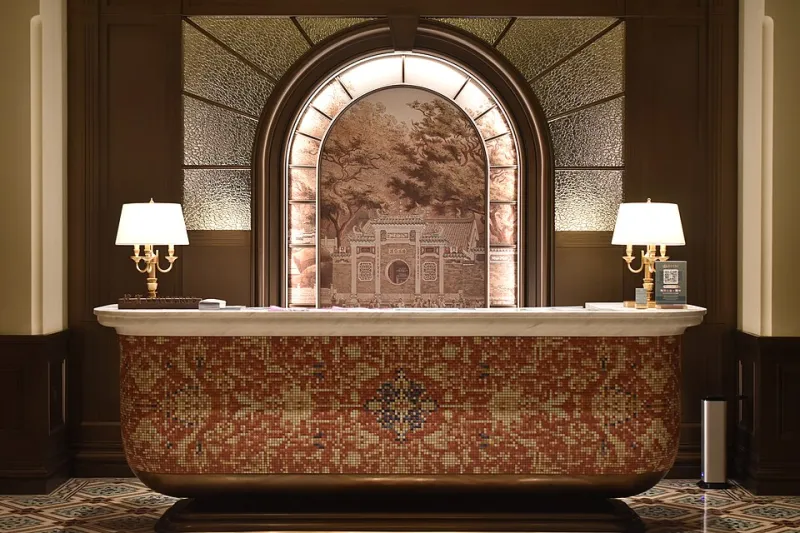
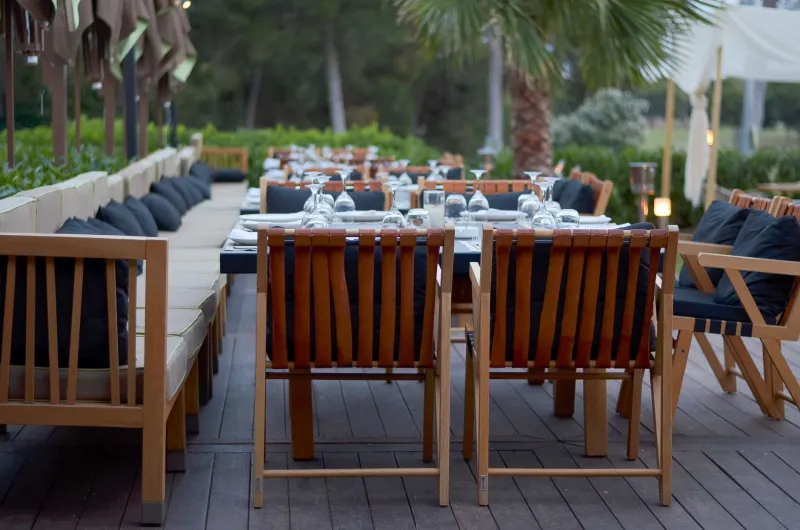
The Room That Rivals the Resort: Inside the New Era of the Destination Suite
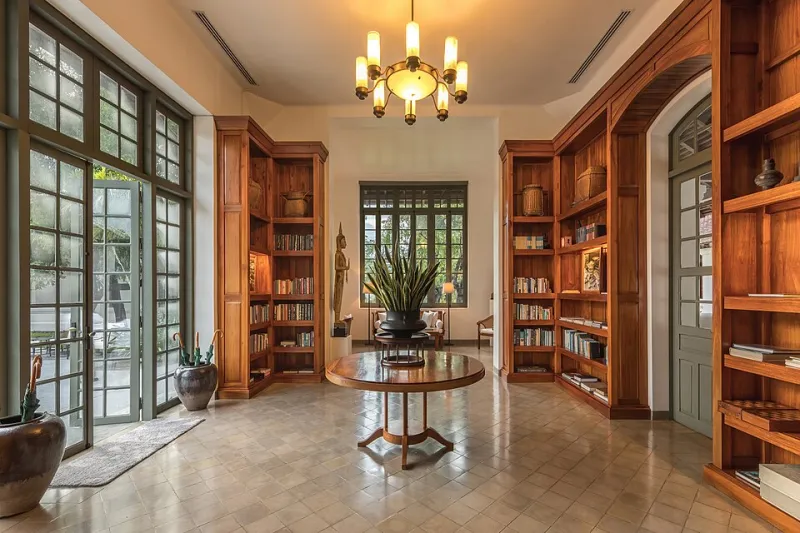
Photo: Basile Morin, CC BY-SA 4.0, via Wikimedia Commons
For much of modern hospitality history, the luxury suite served a simple purpose: it was the finest room available at a hotel worth visiting. The resort was the destination; the suite was merely where one slept. That hierarchy is now being decisively rewritten. At the country's most ambitious properties, the suite has become the attraction itself — a self-contained sanctuary so thoroughly considered that guests book the room first and the resort second.
The Anatomy of a Modern Sanctuary
The transformation begins with space, but it does not end there. Today's flagship suites are conceived as private residences with resort privileges, not oversized hotel rooms. Private terraces with plunge pools and fire features extend the living area outdoors. Dedicated dining alcoves allow for chef-driven dinners served en suite. Dressing rooms are proportioned like boutiques, and bathrooms — long the true test of a property's confidence — now feature soaking tubs positioned for unobstructed views, dual spa showers, and vanities stocked with products that would not be out of place at a standalone apothecary.
What distinguishes the current moment is intentionality. The finest American resorts are no longer adding square footage; they are editing it. A suite in Scottsdale might be oriented so the morning sun strikes a single reading chair at precisely seven o'clock. A coastal suite in California might be designed around the sound of surf rather than the sight of it. These are architectural decisions, not decorative ones, and they signal a property that understands its guests are paying for an experience, not an address.
Wellness Comes to the Bedroom
Perhaps the most significant shift is the migration of the spa into the suite itself. In-room massage tables are no longer requested; they are assumed. The leading properties have gone considerably further, installing dedicated wellness technology that was, until recently, the province of private clinics: circadian lighting systems that ease guests across time zones, air and water filtration of restaurant-grade quality, blackout engineering that renders a midday nap genuinely restorative, and sleep programs complete with curated soundscapes and pillow menus of surprising sophistication.
Several resorts now offer in-suite thermal experiences — personal saunas, steam showers, and cold plunge tubs — effectively giving the guest a private hammam steps from the bed. For travelers who view their vacation as a health intervention rather than an indulgence, this is the difference between a pleasant stay and a transformative one.
The Butler Pantry, Reconsidered
The return of the butler pantry in American suites deserves particular attention. Long a fixture of European grand hotels, the pantry — a discreet service kitchen with its own entrance — allows staff to prepare coffee, chill wine, and stage meals without ever crossing the guest's line of sight. It is hospitality rendered invisible, and its revival speaks to a broader truth about contemporary luxury: the most valuable amenity is often the one the guest never notices.
Paired with a dedicated butler or residential host, the pantry enables a level of service that feels less like hotel operations and more like household management. Breakfast arrives at a chosen hour without a phone call. Evening cocktails are staged on the terrace before the guest has mentioned wanting one. The suite, in effect, acquires a pulse.
Blurring the Line Between Room and Resort
The cumulative effect of these changes is a quiet inversion of the resort formula. Guests who once scheduled their days around poolside service and group programming now find they need not leave the suite at all — and properties are increasingly comfortable with that. Some have begun designing their most expensive accommodations as semi-autonomous experiences, complete with private fitness equipment, personal libraries, and dedicated outdoor dining for the duration of the stay.
This is not antisocial luxury so much as sovereign luxury: the guest decides the terms of engagement. On the second evening of a weeklong stay, one might host friends in the suite's dining room. On the fourth, one might not surface until noon. The resort remains available; the suite simply ensures that the resort is optional.
A Standard Worth the Premium
Skeptics will note that destination suites command rates that can exceed two or three thousand dollars per night. That is precisely the point. The travelers who book them are not purchasing more room; they are purchasing a higher order of consideration — the assurance that every hour, including the unstructured ones, has been designed.
In an era when the word luxury is applied generously and often carelessly, the destination suite offers something rarer: proof of thought. The finest American properties have understood that the last frontier of hospitality is not another restaurant or another infinity pool. It is the room itself, finally worthy of the journey.