Continental Refinement on American Soil: The Sofitel Philosophy of Understated Elegance
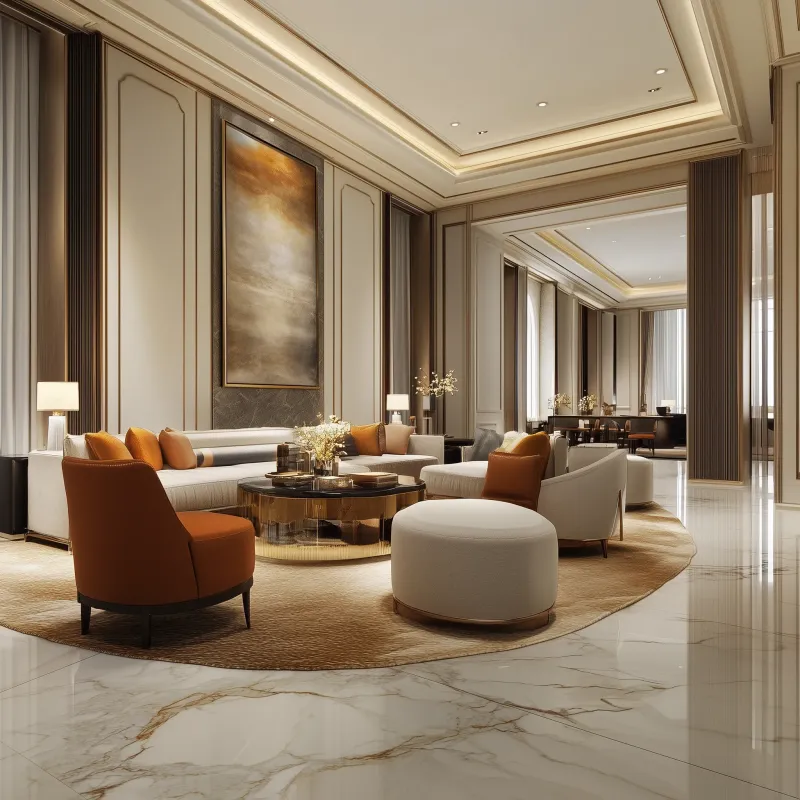
Photo: elegant French-inspired hotel lobby warm lighting refined interior design, via assets2.chatbotsplace.com
There is a particular quality to French luxury that resists easy definition. It is not ostentation—the French have always regarded conspicuous excess with a certain cultural suspicion. It is not minimalism either, which can tip into austerity. It occupies instead a more nuanced register: a confident, unhurried elegance that communicates quality through restraint, warmth through precision, and sophistication through apparent simplicity. It is, in a word, raffinement—and it is precisely this quality that the Sofitel brand has cultivated and carried into the American luxury hospitality market.
For American travelers who have experienced the particular pleasure of a Parisian hotel—the crisp linens, the attentive but unobtrusive service, the sensation of being genuinely cared for without being fussed over—Sofitel properties across the United States offer something genuinely rare: that same continental sensibility, rendered accessible without sacrificing an iota of its essential character.
The Philosophy of Art de Vivre
At the heart of French hospitality lies a concept that translates imperfectly but meaningfully as the art of living well. This is not a marketing phrase but a genuine cultural inheritance—the belief that daily life, at its finest, should be experienced as a series of small, carefully considered pleasures. The morning coffee served at the correct temperature in a properly weighted cup. The afternoon light admitted through well-proportioned windows. The evening meal approached not as fuel but as an occasion.
Sofitel's design and service philosophy draws directly from this tradition. Each property is conceived not merely as accommodation but as an environment in which the art of living well might be practiced and appreciated. This distinction shapes every decision, from the selection of furnishings and textiles to the training of service staff and the composition of culinary menus.
What distinguishes this approach from generic luxury is intentionality. Where other premium hotel brands may achieve opulence through accumulation—more amenities, grander lobbies, larger suites—the French-inspired model achieves its effect through curation. Less, selected with exquisite judgment, invariably surpasses more, assembled without it.
Service as an Art Form
Perhaps the most immediately perceptible difference between French-inspired hospitality and its American counterparts lies in the nature of service itself. American hospitality has many virtues—warmth, enthusiasm, a genuine desire to please—but it can occasionally tip into an informality that, while charming, does not always serve the guest who seeks a more composed experience.
French hospitality operates on a different register. Service is attentive without being intrusive, warm without being familiar, and efficient without conveying haste. The skilled French-trained hotelier reads the guest rather than following a script—understanding when engagement is welcome and when discretion is the greater courtesy.
At Sofitel properties in the United States, this philosophy is embedded in staff training at every level. Front desk associates are taught to observe and remember—a guest's preferred newspaper, a dietary preference mentioned in passing, the name of a traveling companion. These details, recalled without prompting, create the sensation of being genuinely known rather than merely processed. It is a form of attentiveness that feels, to many American guests, almost startlingly personal.
"The first time a staff member remembered my coffee order from the previous morning without my having to repeat it, I understood what all the fuss about French service was about," recalled one frequent guest, a financial consultant from Chicago who has stayed at multiple Sofitel properties across the country. "It sounds like a small thing. It isn't."
Design as Sensory Experience
Sofitel's aesthetic approach to its American properties reflects a careful negotiation between French design heritage and the specific character of each location. The brand does not impose a uniform visual template across its portfolio; rather, it brings a consistent design philosophy—refined, considered, never arbitrary—to bear on spaces that are allowed to reflect their individual contexts.
Certain elements recur across properties as expressions of the brand's identity: the quality of natural light admitted and directed through architectural choices, the prevalence of French textiles and craftsmanship in soft furnishings, the selection of artwork that rewards sustained attention rather than demanding immediate reaction. Color palettes tend toward the sophisticated—neither the aggressive neutrality of Scandinavian minimalism nor the maximalism of certain American luxury brands, but a warm, layered palette that creates environments that feel inhabited rather than staged.
Bathrooms, often an afterthought in lesser properties, receive particular attention. Deep soaking tubs, generous vanity proportions, and the use of quality stone and hardware communicate a respect for the restorative rituals of daily life that is entirely consistent with the art de vivre philosophy.
Culinary Excellence as Cultural Expression
No examination of French-inspired hospitality would be complete without a serious consideration of its culinary dimension. Food, in French cultural life, is not merely sustenance—it is a primary medium of expression, connection, and pleasure. This conviction animates the dining experiences at Sofitel properties in a way that distinguishes them markedly from the broader American hotel restaurant landscape.
Sofitel's culinary philosophy emphasizes seasonal, locally sourced ingredients interpreted through the lens of classical French technique. This is not fusion for its own sake but a genuine dialogue between French culinary tradition and American regional abundance. A property in New Orleans might honor the city's extraordinary culinary heritage while bringing a French technical rigor to its preparation. A property in California might draw on the state's exceptional produce with a lightness and precision that reflects contemporary French gastronomic sensibility.
Breakfast, in particular, is treated as a proper occasion rather than a perfunctory offering. The morning meal at a Sofitel property reflects the French conviction that the day deserves a worthy beginning: freshly baked viennoiseries, properly extracted coffee, seasonal fruit presented with care. For American guests accustomed to the indifferent hotel breakfast buffet, this can be a quietly revelatory experience.
Why Continental Elegance Resonates with American Travelers
The enduring appeal of French-inspired luxury among American travelers speaks to something deeper than mere aesthetics. There is, in the Sofitel experience, a sense of being invited into a tradition—a way of moving through the world with greater deliberateness and appreciation. For many Americans navigating the relentless pace of contemporary professional and personal life, this invitation carries genuine emotional weight.
It is not escapism in the pejorative sense. It is, rather, a temporary inhabitation of a different set of values: the primacy of pleasure thoughtfully pursued, the dignity of genuine rest, the satisfaction of beauty encountered in its proper context. These are not exclusively French values, of course, but the French have been their most eloquent and consistent advocates.
At Oxley Sofitel, we believe that luxury travel at its finest is not merely a change of location but a change of perspective. The continental elegance that defines the Sofitel experience is our invitation to American travelers: to slow down, to notice, to savor—and to return home carrying something of that sensibility with them.